 Skip to main content

What Is a Dual Clutch Transmission (DCT)?
Key Takeaways
- A Dual Clutch Transmission (DCT) uses two separate clutches to enable faster and smoother gear changes.
- Kia’s 7DCT combines the efficiency of a manual gearbox with the convenience of an automatic transmission.
- DCT technology delivers near-continuous power delivery with minimal interruption during gear shifts.
- Kia’s 7DCT is engineered to perform confidently in Kerala’s city traffic, highways, and hill roads.
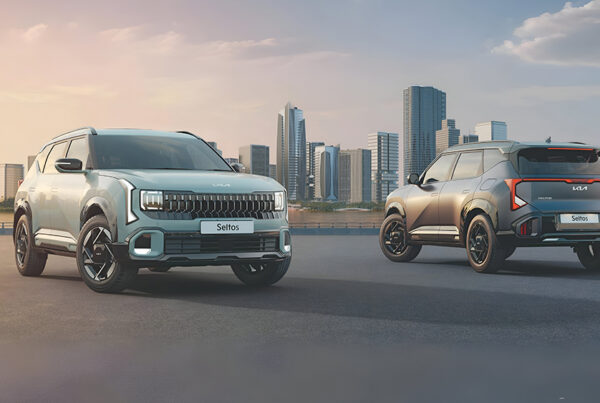
- Several Kia models available at Incheon Kia offer 7DCT technology, including the Seltos, Sonet, Syros, and Carens Clavis.
If you’ve been looking at Kia cars at Incheon Kia whether the Seltos, Sonet, Syros, or Carens Clavis you’ve seen the term 7DCT on the spec sheet. It sounds technical, but once you understand what it does, you’ll see exactly why it makes your drive smoother, faster, and more efficient. This guide explains everything in plain language.
What Is a Dual Clutch Transmission (DCT)?
A Dual Clutch Transmission (DCT) is a type of automatic gearbox that uses two separate clutches instead of one. Think of it as two manual gearboxes cleverly packed inside a single unit, each managing a different set of gears and working in perfect, near-instant coordination.
You get the mechanical efficiency of a manual gearbox with all the ease and comfort of an automatic no clutch pedal, no gear stick fiddling (unless you want it via paddle shifters).
How the Two Clutches Work
- One clutch handles Odd-Numbered Gears — 1st, 3rd, 5th, 7th
- The other clutch handles Even-Numbered Gears — 2nd, 4th, 6th
While one clutch delivers power to the wheels, the other has already pre-selected the next gear ready to engage in milliseconds. The result: gear changes so smooth and quick, you barely feel them happening.
Kia’s 7DCT (7-speed Dual Clutch Transmission) is specifically tuned and tested for Indian road conditions handling everything from Kochi city traffic jams to the steep Ghats on the way to Munnar with precision and confidence.
A Brief History of DCT
The dual-clutch concept was first invented by French engineer Adolphe Kégresse in 1939 for Citroën. The technology gained traction in 1980s motorsport — where every millisecond counts. Mass-production passenger cars received DCT only in 2003, starting with the Volkswagen Golf R32. Kia has since refined this into its award-winning 7-speed DCT, engineered specifically for Indian roads.
How Does DCT Work? Step-by-Step
Here is exactly what happens inside your Kia’s 7DCT every time you accelerate, cruise, or brake:
A Dual Clutch Transmission works by preparing the next gear before the current gear change is completed. This predictive system allows gear shifts to happen extremely quickly and smoothly, with almost no interruption in power delivery.
The following steps explain exactly how Kia’s 7-speed Dual Clutch Transmission (7DCT) operates during normal driving conditions.
01. Vehicle Pulls Away in First Gear
When the vehicle starts moving, Clutch 1 engages and powers the car in 1st gear.
At the same time, the Transmission Control Unit (TCU) predicts that the vehicle will soon require 2nd gear. The system immediately pre-selects 2nd gear using Clutch 2, even before the driver realizes a shift is needed.
As a result, the transmission is always prepared one step ahead, ensuring smoother operation and faster response.
02. Gear Shift Occurs Instantly
As the vehicle reaches the appropriate speed or engine RPM, the transmission performs a seamless gear transition.
During this process:
- Clutch 1 disengages from 1st gear
- Clutch 2 simultaneously engages 2nd gear
Because the next gear was already selected in advance, the shift occurs almost instantly.
Kia’s 7DCT can complete this gear change in approximately 8 milliseconds, which is faster than the blink of a human eye.
03. Continuous Power Delivery
One of the major advantages of a DCT is its ability to maintain nearly continuous engine power during gear changes.
In many traditional automatic transmissions, there is a brief pause in acceleration while the gearbox shifts gears. In contrast, a Dual Clutch Transmission minimizes this interruption because one clutch takes over precisely as the other releases.
This results in:
- Faster acceleration
- Smoother driving feel
- Sharper throttle response
- More refined performance
The vehicle therefore feels more responsive and connected to the driver’s inputs.
04. Downshifting with Precision
The DCT system also performs highly efficient downshifts during braking or deceleration.
When the driver slows down:
- The TCU predicts the lower gear required
- The lower gear is pre-selected on the available clutch
- The downshift occurs instantly and smoothly
This process also improves engine braking, which is especially useful on steep downhill roads and mountain routes such as Munnar, Wayanad, and other Ghat sections in Kerala.
05. Paddle Shifters for Manual Control
Most DCT-equipped Kia models include steering-mounted paddle shifters.
These paddles allow the driver to manually select gears without using a clutch pedal.
- “+” paddle for upshifts
- “−” paddle for downshifts
This feature provides a more engaging driving experience while still retaining the convenience of a fully automatic transmission.
“`html
DCT vs. Manual vs. Traditional Automatic
Understanding DCT is easiest when placed side-by-side with the transmission types most drivers already know:
| Feature | Manual (MT) | Traditional Auto | Kia 7DCT ★ |
|---|---|---|---|
| Clutch Pedal | Required | Not Required | Not Required |
| Gear Shift Speed | Driver-dependent | Moderate | Fastest (~8 ms) |
| Fuel Efficiency | Excellent | Moderate | Excellent |
| Power Interruption | Yes (brief) | Yes (noticeable) | Near-zero |
| City Traffic Ease | Tiring | Comfortable | Very Comfortable |
| Driver Control | Full | Limited | Full (via paddles) |
| Torque Converter | No | Yes | No (direct drive) |
| Performance Feel | Engaging | Relaxed | Sporty + Refined |
| Fuel Economy | Best (manual) | Lower | Near-manual efficiency |
Bottom Line:
DCT delivers the fuel efficiency and mechanical directness of a manual gearbox, combined with the ease of a modern automatic — without the energy losses of a torque converter. It is the best of both worlds.
Why DCT Is Perfect for Kerala Drivers
Kerala roads present a unique mix: dense city traffic in Kochi, Kottayam, and Thrissur; steep mountain curves to Munnar, Wayanad, and Ponmudi; and long straight stretches on NH66 and NH183. Kia’s 7DCT is engineered to excel across all of them.
City Traffic — Kochi, Kottayam, Thrissur
No clutch pedal means zero leg fatigue in stop-and-go traffic on MG Road, SH1, or Thrissur Round.
The TCU manages slow-speed crawling smoothly, making heavy traffic far less tiring.
DCT drivers report significantly less physical effort compared to manual on long city commutes.
Hill Roads — Munnar, Wayanad, Ponmudi, Ghats
Instant torque delivery prevents roll-back on steep inclines — no handbrake juggling needed.
Precise gear control delivers confident, controlled power on uphills and strong engine braking on descents.
The 7-speed range ensures the right gear is always available regardless of gradient or speed.
Highway Driving — NH66, NH183, NH544
Pre-selected gears make overtaking instant and decisive — no waiting for the gearbox to respond.
The 7-speed range keeps the engine in its efficiency sweet spot at highway cruising speeds.
Smoother, continuous power delivery reduces driver fatigue on long journeys.
Sporty & Engaged Driving
Sport Mode (available on select Kia variants) holds gears longer for a more spirited feel.
Paddle shifters let you manually command every gear change when the road gets exciting.
Near-zero torque interruption produces the crisp, connected acceleration of a performance car.
“`html id=”p4x8kd”
Kia Models with 7DCT — Available at Incheon Kia
Kia’s 7-speed DCT is available across its most popular turbo-petrol models in India. All of the following can be experienced and test-driven at Incheon Kia’s showrooms in Kottayam and Kochi:
| Model | Type | Engine | Transmission | Key Features |
|---|---|---|---|---|
| Seltos | Mid-Size SUV | 1.5L T-GDi Turbo Petrol | 7DCT / 6iMT | Paddle shifters, ADAS Level 2+, Trinity Panoramic Display |
| Sonet | Compact SUV | 1.0L T-GDi Turbo Petrol | 7DCT / 6iMT | Paddle shifters, sunroof, 360° camera, ADAS |
| Syros | New-Gen SUV | 1.0L Turbo Petrol | 7DCT | Segment-first features, futuristic design, advanced tech |
| Carens Clavis | Family MPV | 1.5L Turbo Petrol | 7DCT | 3-row seating, panoramic sunroof, wireless charging, Bose audio |
Kia Seltos — Mid-Size SUV
Kia’s best-selling model features the 7DCT paired with the 1.5L T-GDi turbocharged petrol engine. The Seltos 7DCT comes with paddle shifters, multiple drive modes (Eco, Normal, Sport), ADAS Level 2+ with 21 safety features, and the Command-Centric Trinity Panoramic Display (12.3″ infotainment + 12.3″ digital cluster).
Kia Sonet — Compact SUV
The Sonet pairs its peppy 1.0L T-GDi 3-cylinder turbo engine with the 7DCT in mid and top variants. Despite its compact footprint, the Sonet delivers sharp, sporty performance with paddle shifters, a 360° camera, an electric sunroof, wireless charging, and ADAS features. 7DCT variants start at approximately Rs. 10 lakh (ex-showroom).
Kia Syros — New-Generation SUV
Kia’s newest model, launched in April 2026, brings a futuristic design and segment-first features with the 7DCT. The Syros combines modern technology, bold styling, and the proven performance of Kia’s 7-speed dual clutch transmission. Priced from Rs. 8.40 lakh, it is one of the most accessible DCT-equipped SUVs in its class.
Kia Carens Clavis — Family MPV
The Carens Clavis extends DCT technology to Kia’s family MPV segment. The 7DCT variant provides smooth, effortless gear changes for a fully-loaded 7-seater cabin, making long family drives to Ooty, Coorg, or Goa genuinely comfortable. Features include a panoramic dual-pane sunroof, Bose 8-speaker audio, wireless charging, and 64-colour ambient lighting.
Visit Incheon Kia
Our showrooms in Kottayam and Kochi let you see all DCT-equipped Kia models in person, compare variants side-by-side, and book a test drive to feel the 7DCT on Kerala roads. Our product experts will guide you to the right variant for your budget and driving style.
Is DCT the Right Choice for You?
DCT is an excellent choice for most Kerala drivers — but every buyer’s needs are different. Here’s a quick guide:
✔ Choose DCT If…
- You drive in city traffic regularly
- You want automatic ease + good mileage
- You enjoy occasional spirited driving
- You take Ghat roads to hill stations
- You want paddle shifter control
- You want the best technology available
✦ Consider Alternatives If…
- Your driving is 100% slow crawl under 20 km/h (consider 6AT)
- You prefer a fully hands-on drive (consider iMT)
- You primarily drive diesel (Seltos 6AT diesel is excellent)
- Budget is the primary constraint, and the manual is comfortable
Frequently Asked Questions
Is DCT maintenance expensive?
No. Kia’s DCT system is designed for long-term durability and reliability. Regular servicing at authorised service centres is generally sufficient for proper maintenance.
Can DCT handle hilly roads?
Yes. The transmission is specifically engineered for Indian driving conditions, including steep inclines and mountain roads.
Does DCT improve fuel economy?
In most cases, yes. Because a DCT transfers power more directly than a torque-converter automatic, fuel efficiency is generally closer to that of a manual gearbox.
What is the difference between DCT and iMT?
iMT (Intelligent Manual Transmission): The driver changes gears manually while the system controls the clutch
DCT: Fully automatic gear selection with optional manual override through paddle shifters
Is DCT available with diesel engines?
Currently, Kia’s Indian-market DCT systems are primarily paired with turbo-petrol engines.





 Book Service
 Book a Test Drive